In a world of information overload, misunderstandings are not uncommon. This also applies to the science communication activities, one form of which is science festivals that have been organised for several decades now. They are not only a platform for the latest discoveries and knowledge presented in an attractive way, but above all, they are a place where the public experiences the “human” side of research and learns a special form of celebrating it. Marieke Navin, PhD, programme director of the Cheltenham Science Festival in the United Kingdom and guest of the Silesian Science Festival Katowice, talks about building a community that “celebrates science” and trust in scientists.
Małgorzata Kłoskowicz: To start off our conversation, I would like to refer to our own initiative, the Silesian Science Festival Katowice. We are preparing for the 9th edition of this event, having carefully built the festival’s brand and community over the last few years. By comparison, the events organised as part of the Cheltenham Festivals have a rich 80-year history. The Science Festival is part of a prestigious family that includes the world’s oldest literary festival. For 23 years, you have been showing that science can be enjoyable and become an integral part of public culture. How did it all start?
Marieke Navin: The beginning of this story is a unique one. The first festival in Cheltenham was a classical music festival, organised for the first time exactly 80 years ago. It was created shortly after the end of World War II as a way to rebuild the local community. People simply wanted to return to a peaceful life and enjoy it. So a few people in Cheltenham thought, “Let’s create a festival to celebrate peace and a return to that joy”. That’s how it all began – from a genuine human need to celebrate. I believe that this spirit of celebration is at the heart of every festival. The music festival was followed by a literary festival, the oldest in the world, and then a jazz festival. Currently, there are four main festivals in Cheltenham, with the Science Festival being the youngest of the family, but carrying the same “celebratory” DNA.
Małgorzata Kłoskowicz: I think that such a history can very much help in building a message that brings people together. So, with the spirit of celebration as our guide, I would like to ask what the main goal of the Cheltenham Science Festival is today?
Marieke Navin: From my perspective, the greatest value of this festival is the joy of engaging with science. It is our annual opportunity to make, as we say, a lot of noise about science. However, it is not about imparting knowledge to people in the same way as, say, at school. Nor is it about encouraging them, for example, to pursue a career in science, although that can of course be a wonderful side effect. Our mission is to create an environment where people can enjoy being surrounded by science and, thanks to this positive experience, walk away from it knowing that science is for them. People don’t tend to say, “I don’t like music”, “I don’t like books”, or “I don’t like art”, because they intuitively understand the diversity of these fields, the multitude of genres and forms. Yet for some reason, it is acceptable to say, “I don’t like science.” We want to dismantle this sentiment by integrating science into the everyday, non-university reality in such a way that it is perceived as an important and diverse part of ordinary, day-to-day life. It can be something as simple as spending time with friends and family in a nice atmosphere and place where all activities are related to science. It is an opportunity to talk and perhaps learn something new.
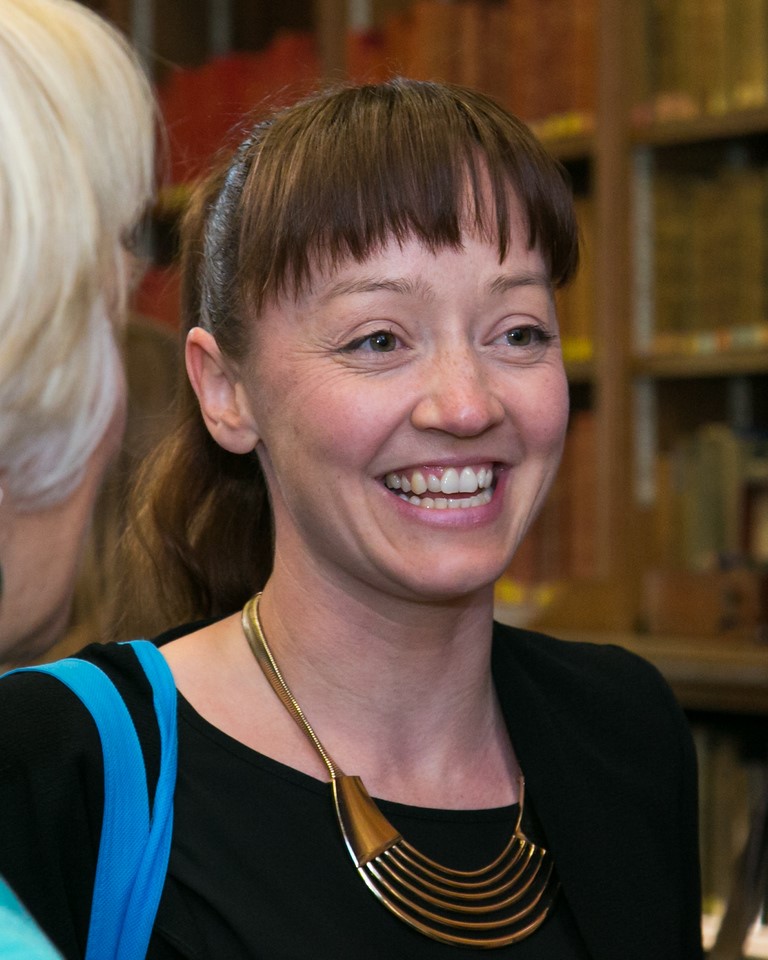
I believe we have succeeded if we have given people the confidence to strike up a conversation with friends or children over dinner – for example, about information they have heard in the news – taking into account the scientific context. We want to make people feel that science is really for them. This means that when organising a science festival, we work to break down specific barriers or stereotypes in order to reach as many people as possible.
Małgorzata Kłoskowicz: Could you elaborate on what barriers you mean?
Marieke Navin: Continuing this thought, I must admit that I find it frustrating how easily some people reject science altogether. They say, “I was never good at maths at school”. Negative experiences in the classroom have probably discouraged many people. For some reason, science is treated unfairly, lumped into one big category that can be dismissed just like that. This is something we pay particular attention to. Our approach is to try to show science as an integral and emotionally engaging part of our culture. In this sense, science is like art. Of course, this involves confronting many stereotypes that still haunt us, such as the belief that science is very difficult, that it is boring, that it is not for girls, and that it is only for white men in lab coats. We show that scientists are normal people with whom you can identify. They are your friends and neighbours who have simply chosen science as their career path. When organising the festival, it is therefore important to find speakers who are not only experts in their fields, but who are also able to talk about their scientific experiences in an engaging, passionate way and who are also just like us.
Małgorzata Kłoskowicz: The word that keeps coming up in our conversation is celebration. Let’s pause here for a moment, because that is what makes up the foundation of the meaning of the word festival. Festivals are a form of celebration. Sometimes, when we talk to people about this kind of way of science communication, some fear that the festival atmosphere may be perceived as trivialising science. So how can we talk about the experience of celebration in order to free ourselves from such fears and simply allow ourselves and others to enjoy such an occasion, even if only once a year?
Marieke Navin: It’s not easy! Indeed, promoting a science festival is one the biggest challenges we face. You can’t just tell people about it. It’s a form of gathering that you have to experience to understand. Therefore, the most important goal in this context is not so much to send invitations to as many people as possible, but above all to make them actually take part in the celebration and then want to repeat the experience. I admit that getting the message across to the audience is sometimes more difficult than finding brilliant speakers or putting together a great programme. That is why it is most important to be where the people are. So we organise spontaneous events in unexpected places, such as the city centre, shopping centres or railway stations. We choose spaces where people go about their daily business so that they can simply... bump into us. Then we can show them what we have to offer. So what matters is reaching people who we know have not been with us yet.
Małgorzata Kłoskowicz: I assume there is no need to persuade families with children...
Marieke Navin: When we prepare subsequent editions of the Cheltenham Science Festival, we always try to expand our audience. This means we need to check who else we should contact. The first step is to go out to people and talk to them, invite them. We want to understand what prevents them from participating in the event. It turns out that it may be, for example, a financial or cultural barrier. Then we think about what we can do to make these people feel welcome. There are many solutions. We can avoid organising certain meetings during prayer times, we can give up alcohol, we can take into account financial issues and the needs of people with various disabilities. Ambassadors are also important. First of all, we treat all our speakers as ambassadors of the festival. Importantly, they are not only scientists, but also writers, poets, comedians, and artists practising various forms of creativity. We hope that they will invite other people from their circles to participate in the festival. This is one of the reasons why we like to work with a diverse group of speakers – they share their unique audiences with us. Then, in the case of specific communities, we work on building relationships with people who represent these groups. We establish relationships with them so that they become our advocates. If they spread the word about the great things we do, there is a better chance that more people will visit us. Finally, our volunteers are wonderful ambassadors as well. I would even say that they are our number one ambassadors. They are often the first people that participants meet. They wear bright pink T-shirts, welcome people to the festival and are the faces of the event. These are people who live in Cheltenham and are culturally active, so it’s really important that we nurture this relationship.
Małgorzata Kłoskowicz: I’m curious, who is the most difficult to convince to participate in the festival?
Marieke Navin: You mentioned families with children. Indeed, it is very easy to encourage children to come because there is a lot of space to play here. Their parents and grandparents will naturally follow them. Interestingly, the hardest people to persuade are adults aged 18 to 30. They don’t want family shows, and although they may be interested in interactive activities, they need something more suited to their leisure activities. For example, many people in this age group do not necessarily want to buy a ticket for an event that lasts an hour and requires them to sit in a chair without the opportunity to speak. So you need to give them more freedom, which means allowing them to enter or leave a show at any time. You can offer a space to socialise with people of a similar age or simply provide a variety of content, including shorter and more dynamic pieces. We therefore need to carefully analyse the formats of events and co-design the programme with people representing the groups we are interested in, in order to attract them effectively.
Małgorzata Kłoskowicz: When the festival begins and we know that we have managed to invite many thousands of people representing a wide variety of groups, we can start celebrating together. However, this is not the only goal. Since we are already gathering such a large audience, we are certainly also influencing the position of science in the era of social media, information noise and various tools of manipulation. How does the Cheltenham Science Festival create a space for building trust in knowledge-based dialogue, especially on controversial or politicised topics?
Marieke Navin: We focus on creating a space for conversation. A big part of what we do is inviting great people, speakers, and facilitating open discussion with the audience. Of course, the person leading and moderating such a conversation plays an important role. This is important to us because we allow people to ask questions directly to researchers. Such a conversation really convinces guests that scientists are people just like them. But it is also a way of showing that difficult topics have a human face, if I may put it that way. There are many issues that arouse extreme emotions, but even in such cases, we are able to offer a form of meeting that will leave good memories for everyone involved. Naturally, the content presented is based on facts. Scientists talk about research results that are rooted in scientific methods. The trick is to maintain a balance between presenting facts and a human, friendly form of conversation.
Małgorzata Kłoskowicz: There are currently many formats for science communication. We have devoted a lot of attention to science festivals, but I would also like to mention the FameLab competition. I am talking about it because the University of Silesia in Katowice hosted the national finals, which took place in October 2025. You are the international coordinator of this initiative. I am fascinated by the format of the competition, and it compels me to ask one of my favourite questions: is it really possible to convey the essence of even the most complex research in just three minutes?
Marieke Navin: I am absolutely convinced that it can be done! We have been organising FameLab for 20 years, and it has reached over 30 countries. The format works extremely well because it forces scientists to think beyond their specific, day-to-day tasks and look at them from a broader perspective. Presenting their scientific interests in a short, compelling narrative helps both the speaker and the audience focus on what is most important and exciting about the work. You can start by asking yourself the same question several times in a row: why? Subsequent answers to this one question can lead us to surprising conclusions. I believe it is a form of art that can be learned.
Małgorzata Kłoskowicz: This brings me to my last question. What is the most important personal lesson you have learned from your experiences with various forms of science promotion?
Marieke Navin: I think the biggest lesson I learned was from participating in the FameLab competition as a PhD student. I was researching neutrinos, and my first instinct was to share everything I knew – facts, figures and data. What FameLab really taught me was restraint. It’s not about telling people everything, but about telling them a story. That’s when I realised how important the “human” side of science is. This lesson also applies to festivals. As I mentioned, we facilitate encounters between people, we raise the curtain, we don’t invite participants to the university, which can be intimidating for many. Instead, we make scientists leave their “ivory towers” to talk about science in parks, gardens and city centres.
Małgorzata Kłoskowicz: All that remains is for us to invite everyone to celebrate together at science festivals. Thank you very much for the interview.
Interview by Małgorzata Kłoskowicz
Photos: private archive